March 7, 2026 · Gaurav Radadiya
You set up your notify-me button. You connected the restock email. You picked a channel. And then you moved on. That was probably six months ago, or longer.
Here is the problem: notification setups do not degrade loudly. They degrade quietly. The button stops showing on mobile after a theme update, and no one notices. The email goes to a subscriber who already bought the product from a competitor, and the send count still looks fine. The inventory feed says “out of stock” to AI shopping agents while you actually restocked on Tuesday.
This is the Q2 2026 restock notification audit. It covers five areas: your notify-me button, your channel mix, your conversion tracking, your AI readiness, and your inventory feed accuracy. Each section has pass/fail checkpoints. Most merchants find at least two fixable gaps they did not know existed.
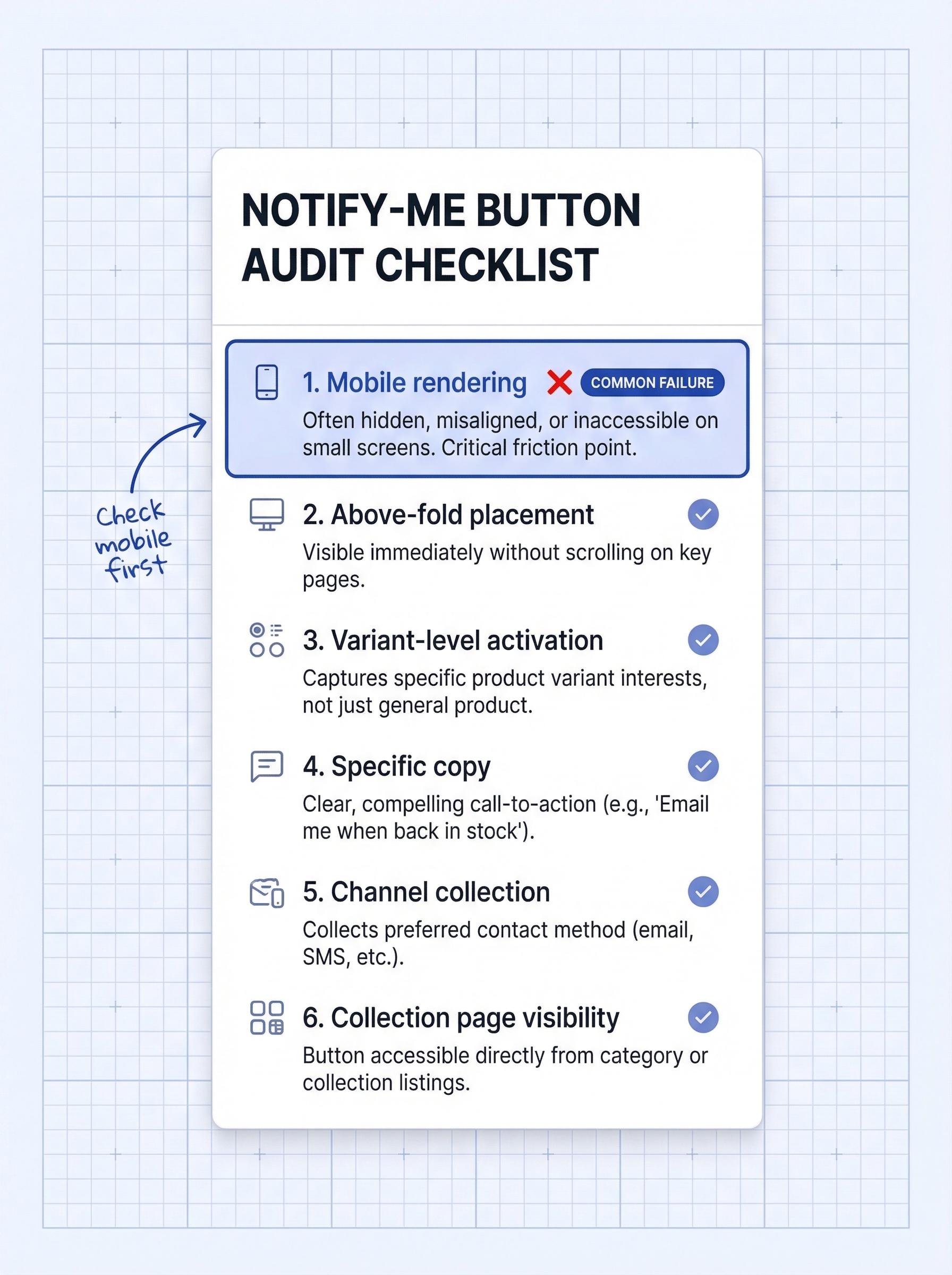
The button is the front door of your entire notification system. If it is invisible, broken, or buried, nothing downstream matters because you never collected the subscriber.
Run these checks:
The most common gap: Theme updates and Shopify checkout extensibility migrations frequently reset or hide the notify-me widget. If you updated your theme in the last six months and have not checked the button placement since, check it now. A full guide to adding and optimizing your Notify Me button on Shopify covers every placement decision.
69% of online shoppers abandon entirely when they hit an out-of-stock page with no way to be notified (ecommerce stockout behavior data, 2024). A broken button is an invisible revenue leak.
A back-in-stock notification is only as strong as the channel delivering it. Most Shopify merchants set up email and never revisit. But channel defaults from 18 months ago may now be missing the largest open-rate gap in ecommerce.
Run these checks:
The most common gap: Email-only setups. The 98% vs. 21% open rate gap between WhatsApp and email is not a marginal improvement. It is an entirely different response curve. If you have not added a second channel, that is the single highest-impact change this audit will surface.
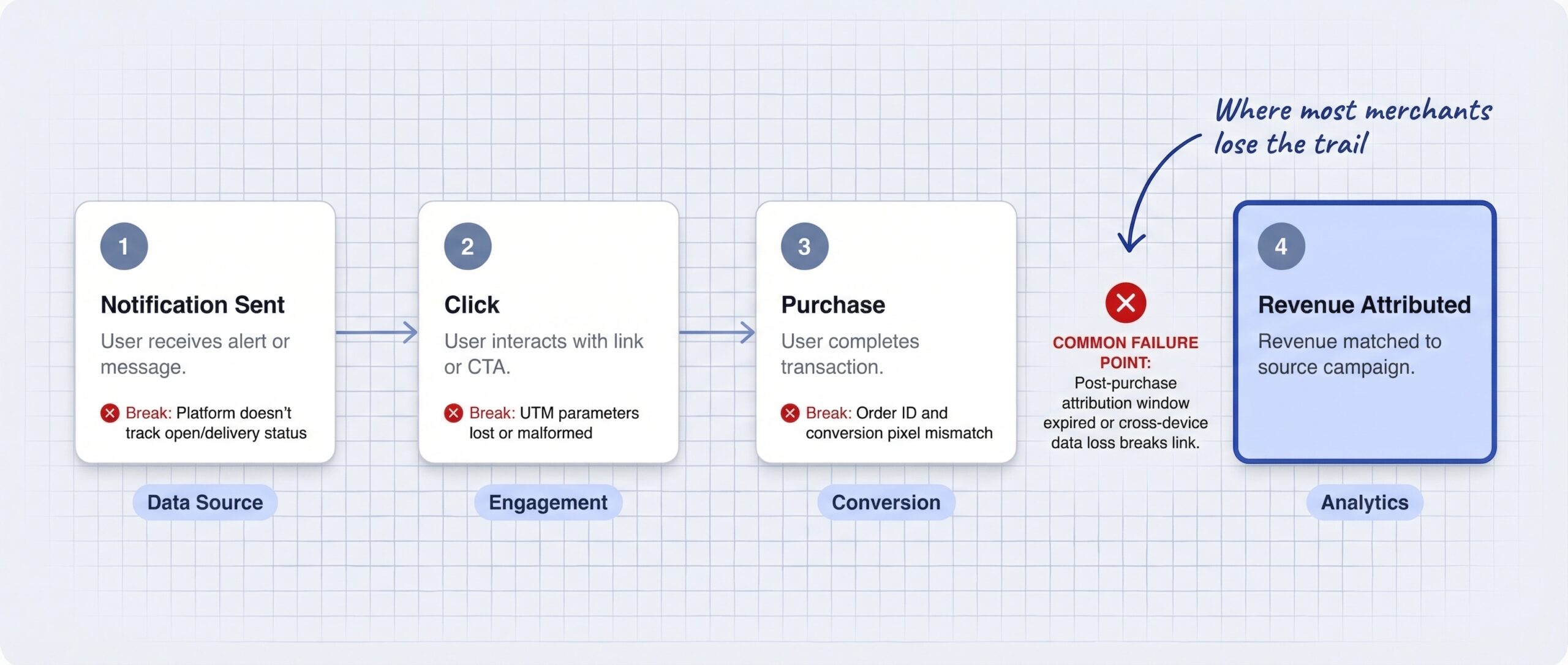
Most merchants can see how many notifications they sent. Far fewer can answer: how much revenue did those notifications generate? Without that number, you cannot improve what you cannot measure.
Run these checks:
The most common gap: Zero revenue attribution. Merchants see “notifications sent” in the app dashboard but have no link to actual orders in Shopify analytics. This means the program’s ROI is unknown, making it hard to justify expansion or investment. A detailed breakdown of back-in-stock conversion rate benchmarks on Shopify gives you the numbers to compare against, and the full back-in-stock alerts ROI framework shows how to calculate what the program is worth.
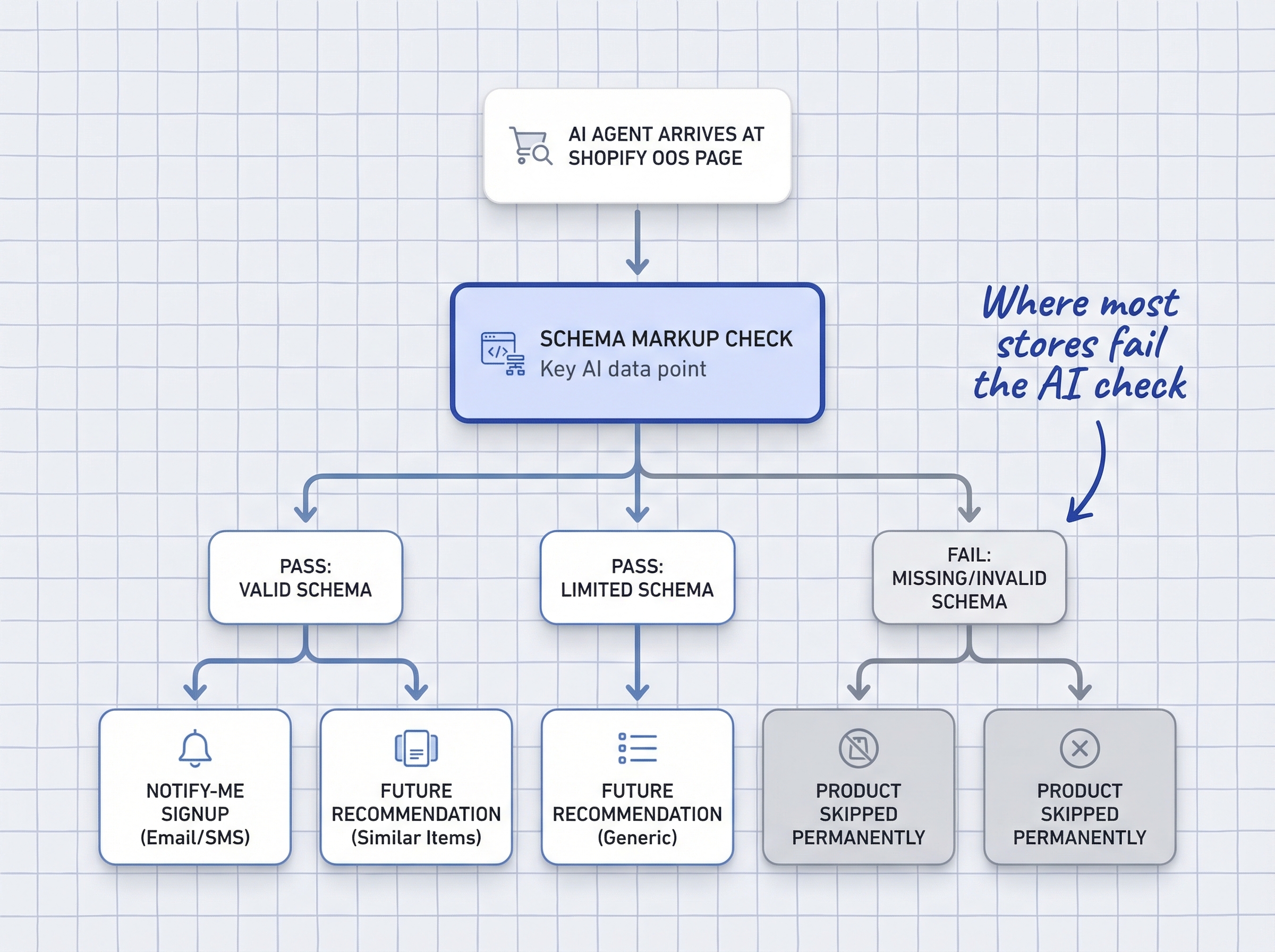
AI shopping agents from Google, ChatGPT, and Perplexity are now surfacing and filtering Shopify products based on real-time availability data. AI-driven ecommerce orders have grown 14x since the start of 2025 (Shopify’s agentic commerce readiness guidance, 2025). A notification system that works for human shoppers may be invisible to the AI layer.
Run these checks:
The most common gap: Merchants who hide out-of-stock products lose both the notify-me signup opportunity AND AI discoverability simultaneously. Understanding how AI shoppers handle out-of-stock pages on Shopify makes the cost of hiding OOS pages concrete.
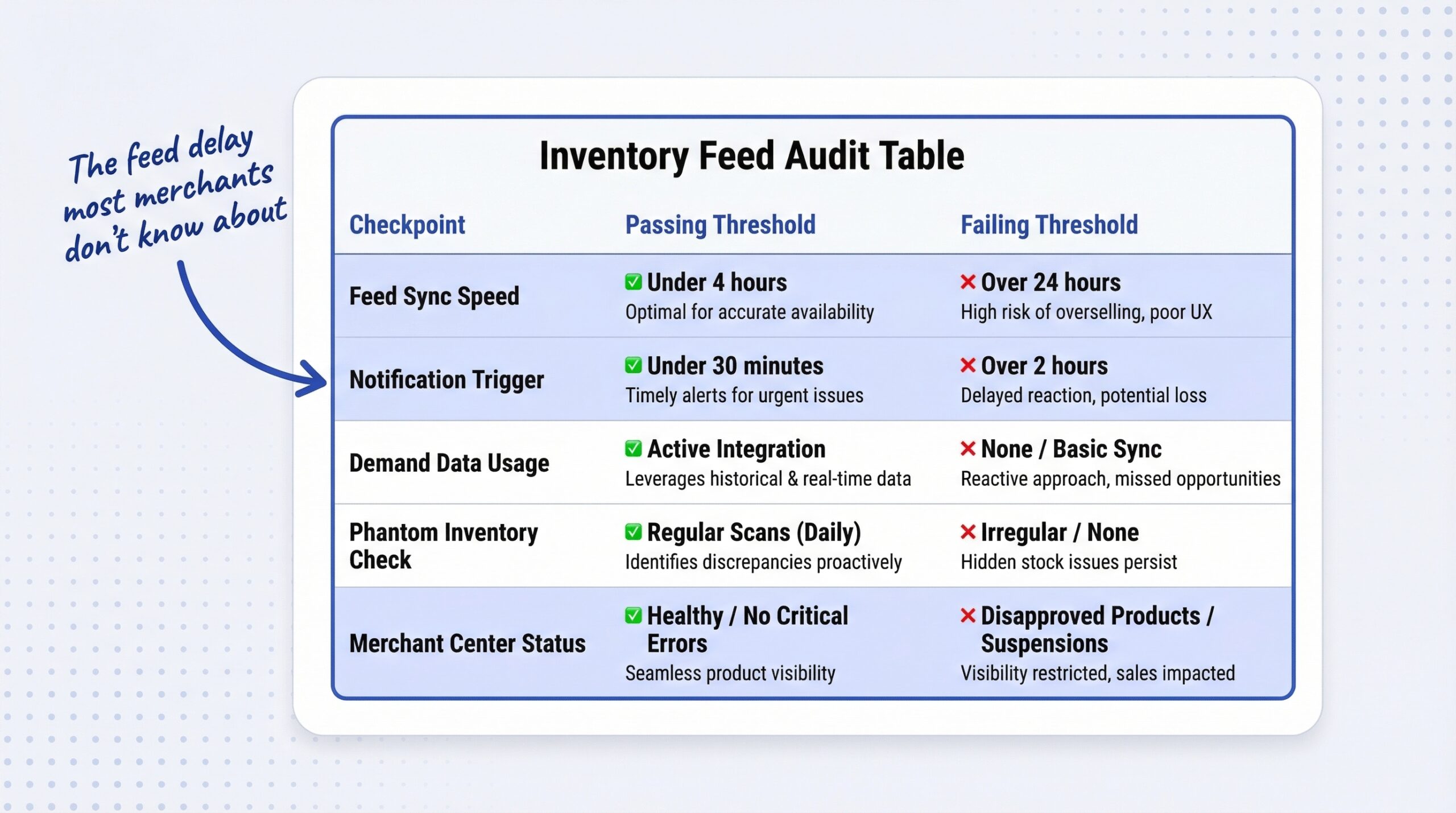
Your notify-me button and email flows exist to recover demand after a stockout. But if your inventory feed tells AI agents that a product is still out of stock when you actually restocked it, the entire system fires on false signals. Feed inaccuracy is the least visible audit area and the most damaging.
Run these checks:
The most common gap: The gap between “product restocked in Shopify” and “AI agents know it is back” is hours for most merchants, sometimes a full day. During that window, every AI shopping query for your product sees “unavailable” and recommends a competitor instead. A deep dive into inventory feed accuracy for AI shoppers covers the full fix. Using waitlist data to inform restock planning closes the loop between demand capture and purchasing.
Count your failed checkpoints across all five sections (29 total checkpoints).
0-2 failed checkpoints: Your notification setup is healthy. Focus on marginal optimization: adding a second channel, tightening attribution windows, or increasing feed sync frequency.
3-6 failed checkpoints: You have real gaps generating real lost revenue. Prioritize by section: channel mix and conversion tracking gaps are the highest-priority restock notification optimization areas because they affect every notification you send.
7 or more failed checkpoints: The setup needs a systematic rebuild, not incremental tweaks. Start with the notify-me button (if it is broken, nothing else matters), then add channels, then fix tracking.
This audit draws on every topic covered in this 14-article series: notify-me button optimization, conversion rate benchmarks, ROI measurement, AI readiness, inventory feed accuracy, and predictive restocking. Each checkpoint has a deeper breakdown in the articles linked throughout.
Q2 2026 is the right moment to run this. The Shopify checkout extensibility deadline is approaching in August. AI shopping agents are accelerating. WhatsApp adoption is growing. The merchants who audit now will capture the demand that merchants who wait will lose.
Quarterly is the recommended cadence. Theme updates, app changes, and Shopify platform updates can silently break notification components between audits. A Q2 and Q4 review catches most issues before they compound.
The most frequently failed checkpoint is mobile button visibility. Over 70% of Shopify traffic is mobile, but many notify-me buttons are invisible or broken on smaller screens due to theme updates that reset widget placement.
The benchmark is 6.41% subscriber-to-purchase conversion rate for top-performing stores, based on Omnisend’s 2025 data across 150,000 brands. If your rate is below 3%, investigate your send timing, subject lines, and channel mix.
Yes, if your customer base uses WhatsApp. WhatsApp open rates reach 98% compared to 21% for email. For most Shopify stores, adding WhatsApp as a notification channel is the single highest-impact change available in Q2 2026.
Check two things: that your OOS product pages are not hidden or redirected (they should remain indexed), and that your Schema.org product availability markup correctly reads “OutOfStock” rather than “InStock” or missing entirely.
Run through the five-section audit in this article. It takes one session. Count your failed checkpoints and prioritize fixes by section. Button and channel mix gaps have the highest immediate revenue impact.
Keep reading